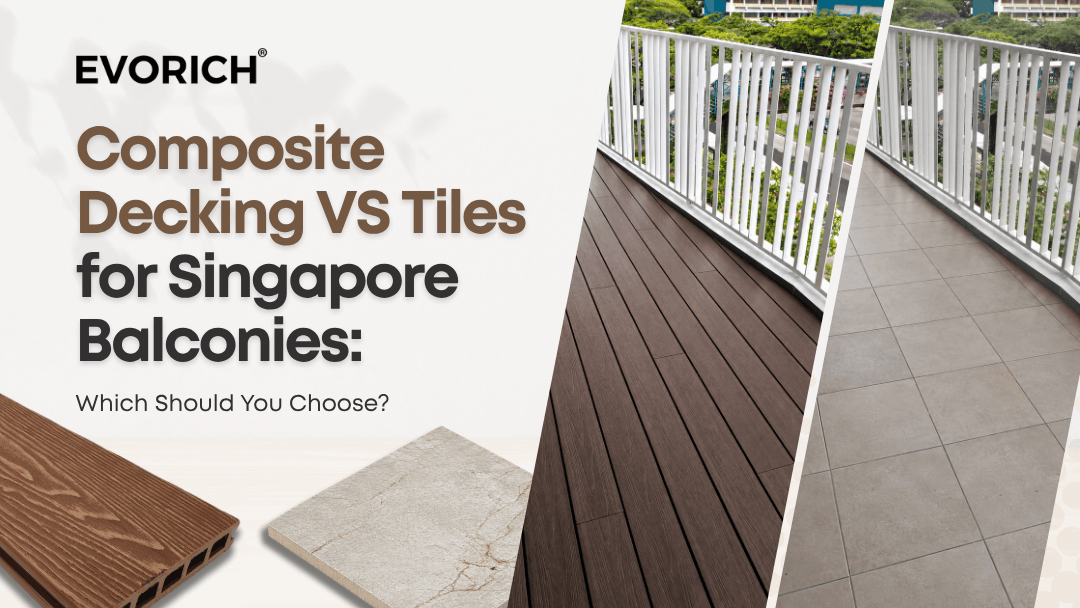
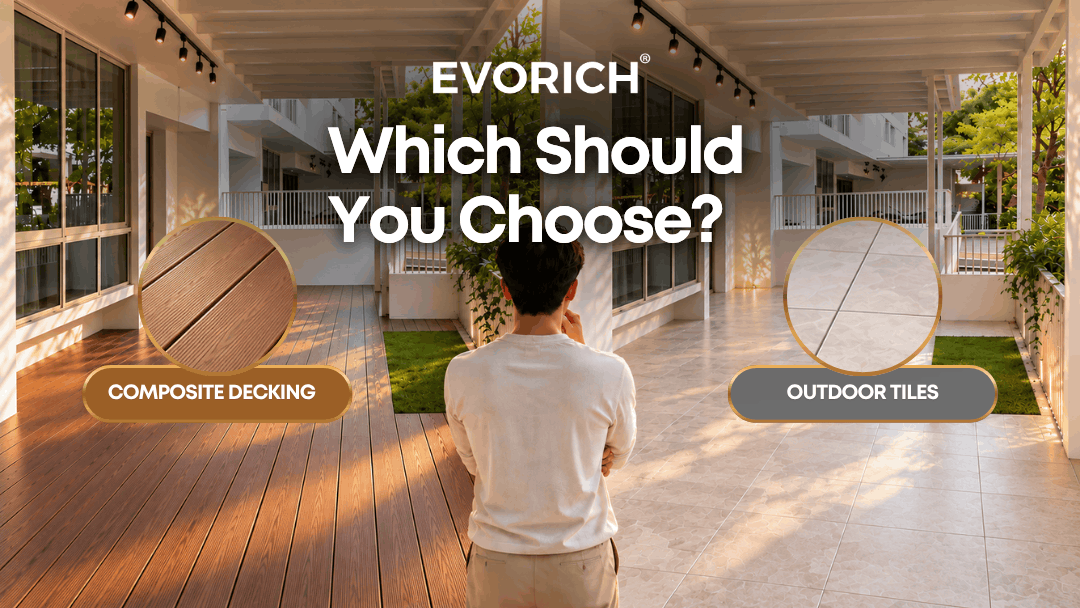
Choosing the right balcony flooring can completely change how your outdoor space looks and feels.
For homeowners in Singapore, two common choices are composite decking and outdoor tiles. Both can work well, but they offer very different aesthetics, maintenance requirements and underfoot experiences.
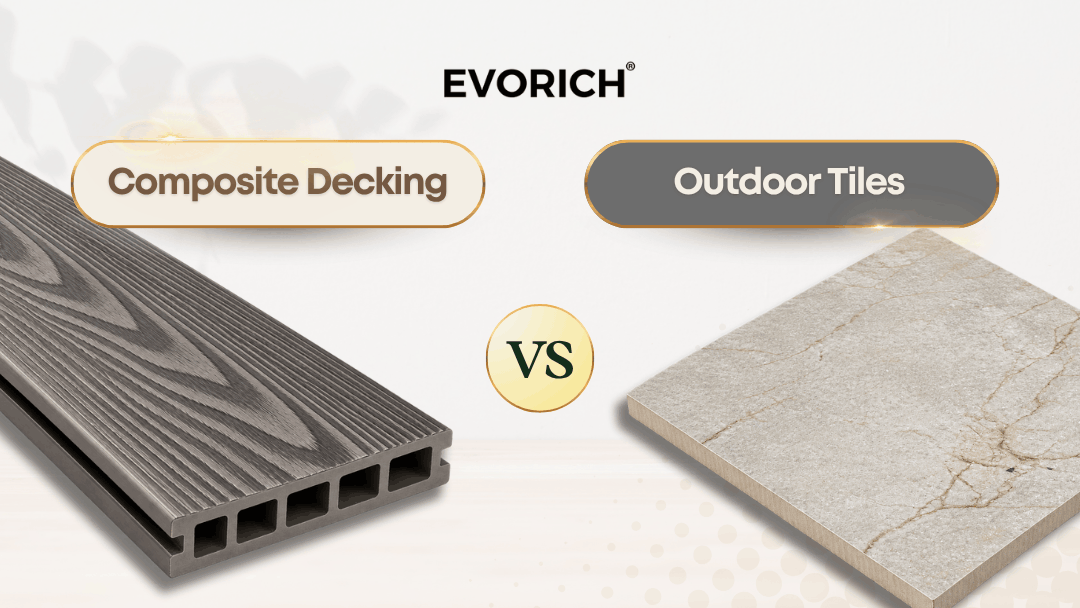
So, which is better for a Singapore balcony: composite decking or tiles?
The answer depends on your lifestyle, design preference and how you plan to use your balcony.
Quick Answer: Composite Decking vs Tiles
If you want a warmer, more resort-like or timber-inspired balcony, composite decking may be the better choice.
If you prefer a hard, seamless and conventional flooring surface, outdoor tiles may suit you better.
The key differences usually come down to:
- Appearance
- Maintenance
- Comfort underfoot
- Installation
- Drainage
- Heat exposure
- Long-term upkeep
Let’s compare them in detail.
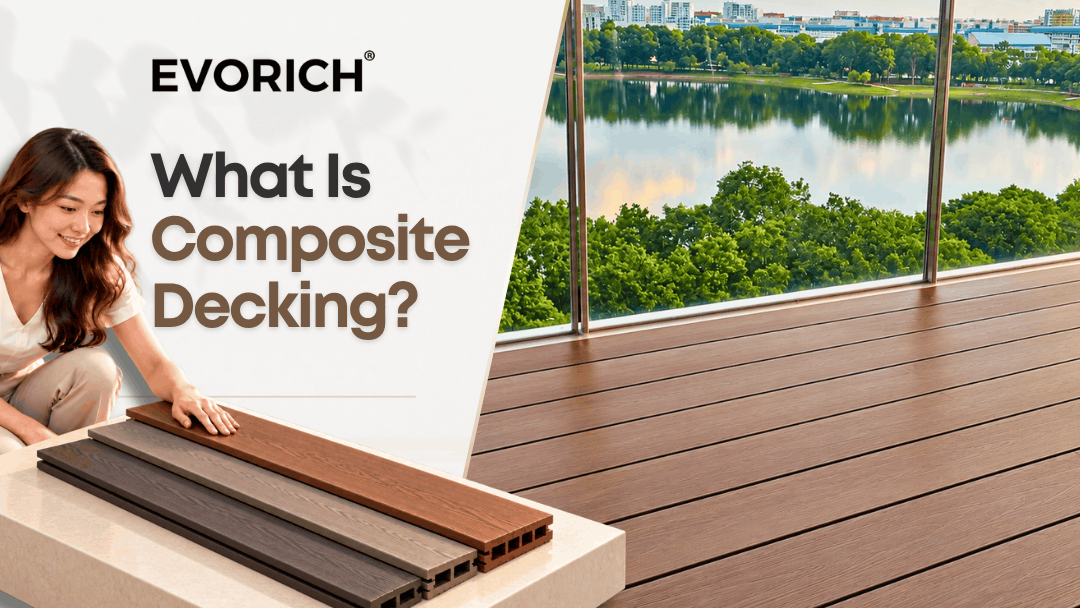
What Is Composite Decking?
Composite decking is an outdoor flooring material designed to provide the appearance of timber while offering improved resistance to moisture and outdoor weather conditions.
Unlike natural timber, composite decking generally requires less ongoing maintenance and does not need the same regular sanding, staining or sealing.
It is commonly used for:
- Condo balconies
- Private home balconies
- Outdoor terraces
- Patios
- Poolside areas
- Commercial outdoor spaces
For homeowners who like the look of wood but want something easier to maintain, composite decking is a popular alternative.
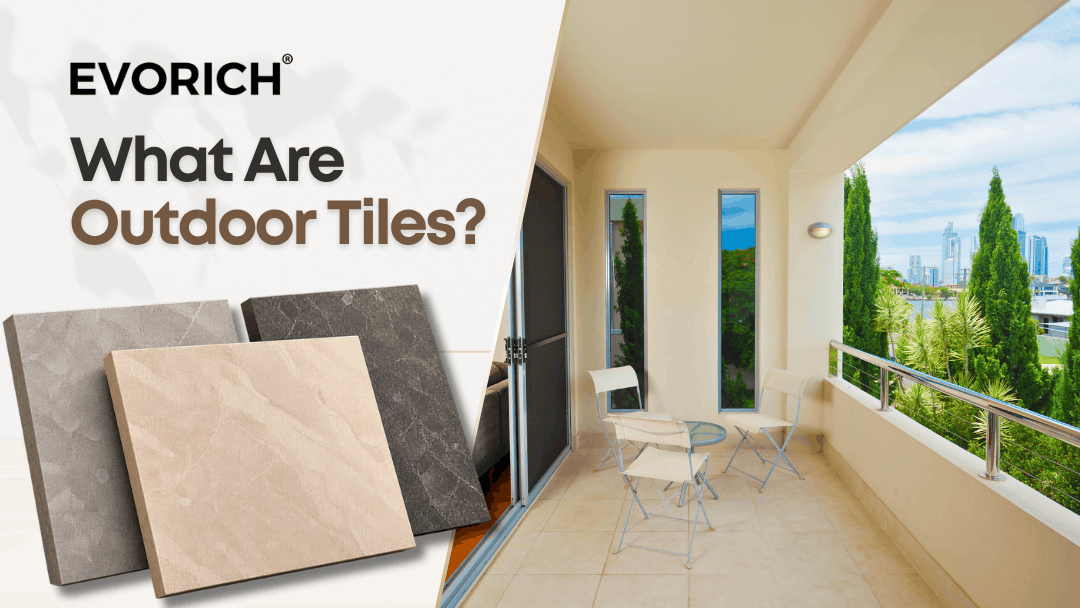
What Are Outdoor Tiles?
Outdoor tiles are hard flooring materials designed for external areas.
Common choices include porcelain, ceramic and other outdoor-rated tile systems.
Tiles can create a clean, modern and seamless appearance and are available in a wide range of colours, textures and finishes.
They are commonly used for:
- Balconies
- Patios
- Outdoor walkways
- Service yards
- Terraces
- Poolside areas
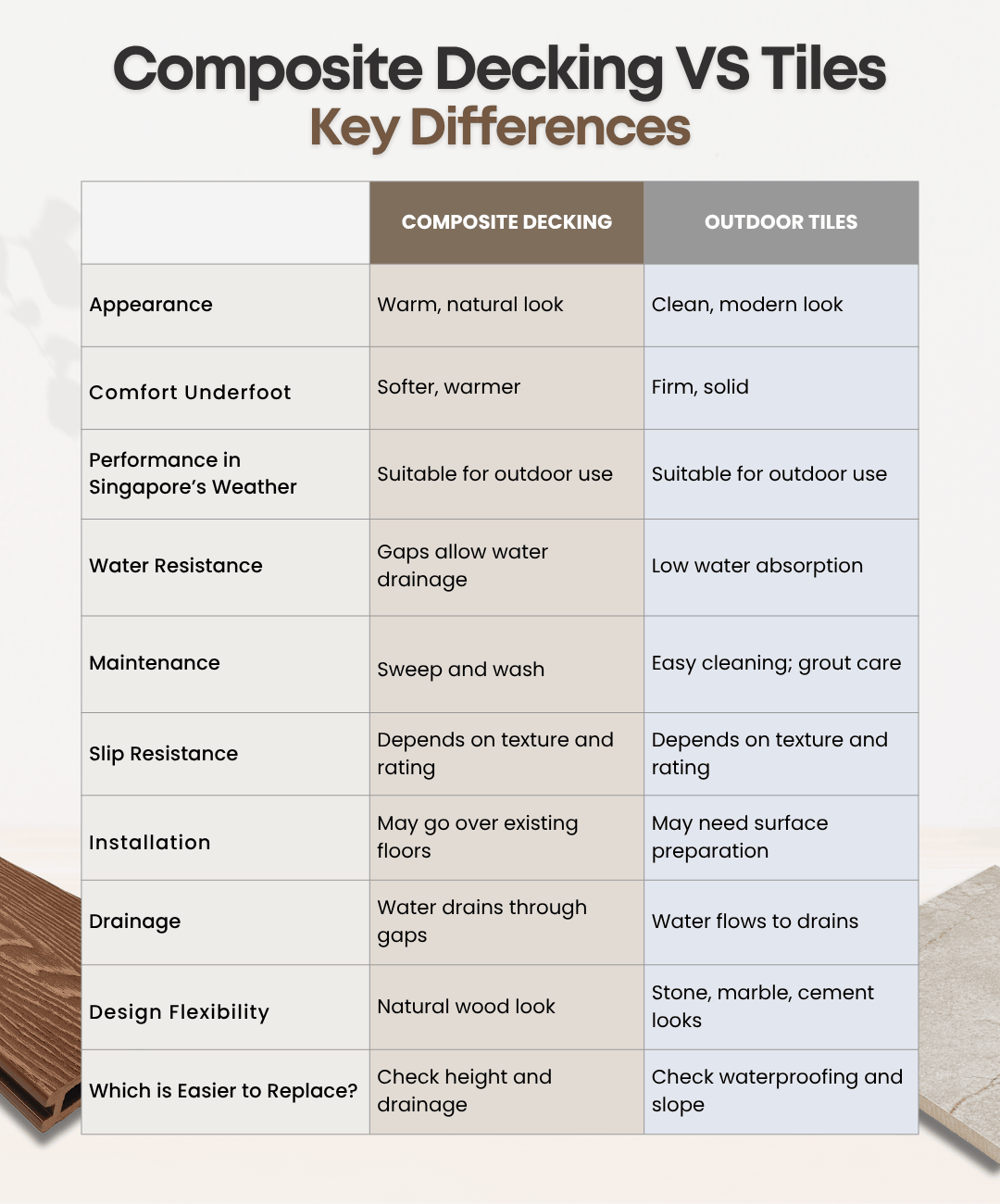
Composite Decking vs Tiles: Key Differences
1. Appearance
Composite decking usually creates a warmer and more natural look.
It works particularly well for homeowners who prefer:
- Resort-inspired interiors
- Japandi designs
- Scandinavian themes
- Tropical concepts
- Biophilic interiors
- Outdoor garden aesthetics
Tiles can create a more contemporary, minimalist or architectural appearance.
Depending on the design, tiles can resemble:
- Stone
- Cement
- Marble
- Timber
- Terrazzo
If you want your balcony to feel like an extension of a relaxing outdoor retreat, decking may create a softer visual effect.
If you prefer a clean and structured look, tiles may be more suitable.
2. Comfort Underfoot
Composite decking generally has a warmer and softer feel compared with hard tiles.
This can make a difference if you frequently use your balcony barefoot.
Tiles, on the other hand, provide a firm and solid surface.
Under strong sunlight, both materials can become warm, although the exact temperature will depend on the colour, material composition and amount of direct sun exposure.
Darker surfaces generally absorb more heat than lighter ones.
3. Performance in Singapore's Weather
Singapore’s climate means balcony flooring must cope with:
- High humidity
- Frequent rainfall
- Strong sunlight
- Heat
- Sudden weather changes
Both outdoor-rated tiles and properly designed composite decking can be suitable for Singapore balconies.
However, installation quality is just as important as the flooring material itself.
Proper drainage must always be maintained so rainwater can flow towards the balcony’s drainage points.
4. Water Resistance
Outdoor tiles themselves are generally highly resistant to water.
However, grout joints and the underlying installation system also play an important role in long-term performance.
Composite decking is also designed for outdoor use and offers good resistance to moisture.
Because decking systems are typically installed with gaps between boards, water can pass through to the drainage level below.
This makes proper drainage planning especially important.
5. Maintenance
One of the main reasons homeowners consider composite decking is lower maintenance compared with natural timber.
For regular maintenance, composite decking usually requires:
- Sweeping
- Removal of leaves and debris
- Periodic washing
- Cleaning with suitable products
Outdoor tiles are also relatively easy to maintain.
However, tile grout may require additional cleaning over time, especially in exposed areas where dirt, algae or staining can accumulate.
The actual maintenance required will depend on exposure, usage and the specific material chosen.
6. Slip Resistance
Slip resistance is particularly important for balconies because surfaces may become wet after rain.
Both tiles and composite decking can offer good slip resistance when the correct product is selected.
Homeowners should avoid choosing flooring based purely on appearance.
Always consider the surface texture and relevant slip-resistance characteristics, especially for households with:
- Elderly family members
- Young children
- Pets
7. Installation
Tile installation may involve more extensive renovation work depending on the existing balcony surface.
This can include:
- Removal of existing finishes
- Surface preparation
- Waterproofing considerations
- Adhesive application
- Tile laying
- Grouting
Composite decking may sometimes be installed over an existing balcony surface using an appropriate support system.
Depending on site conditions, this can reduce the need for major hacking.
However, the existing balcony must still be assessed carefully before installation.
Can Composite Decking Be Installed Without Hacking?
In some cases, yes.
Composite decking may be installed over the existing flooring without removing the original surface.
However, this depends on:
- Existing floor condition
- Finished floor height
- Balcony door clearance
- Drainage position
- Floor gradient
- Installation system
A professional site assessment is recommended before installation.
8. Drainage
Drainage is one of the most important factors when renovating a balcony.
Regardless of whether you choose tiles or decking, drainage points should never be obstructed.
For composite decking systems, water typically drains through the gaps between the decking boards to the original balcony floor below.
Proper access to drainage points should also be considered for future cleaning and maintenance.
9. Design Flexibility
Composite decking works especially well when homeowners want to visually distinguish the balcony from the indoor living area.
For example, a living room with vinyl flooring can transition into a timber-inspired balcony deck, creating a clear but coordinated indoor-outdoor concept.
Tiles offer greater variety in surface patterns.
Homeowners can choose from finishes that resemble:
- Concrete
- Natural stone
- Marble
- Wood
- Terrazzo
The better choice therefore depends largely on the overall interior concept.
10. Which Is Easier to Replace?
Decking systems can sometimes offer greater flexibility because individual boards may be replaceable depending on the system and installation method.
Tile replacement can be more involved because damaged tiles may need to be hacked out and replaced.
Replacement can also be challenging if the original tile design is discontinued.
For either option, homeowners should keep spare materials after installation where possible.
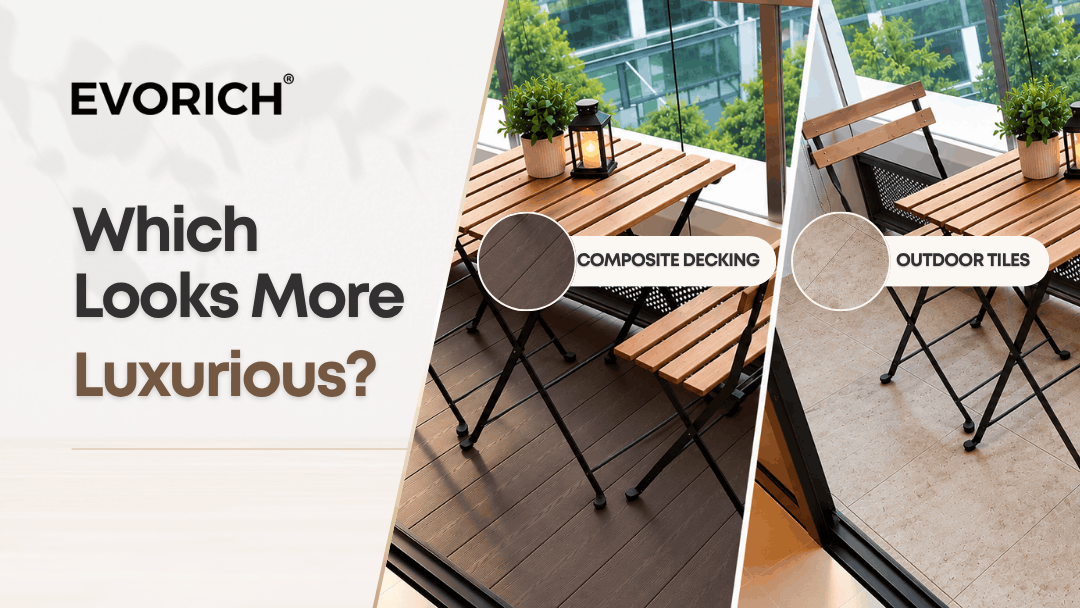
Composite Decking vs Tiles: Which Looks More Luxurious?
Luxury is subjective.
For homeowners who enjoy resort-style, tropical or nature-inspired spaces, composite decking can create a premium outdoor atmosphere.
Pairing decking with:
- Greenery
- Outdoor lounge chairs
- Warm lighting
- Small café tables
- Vertical gardens
can transform even a compact balcony into a relaxing outdoor corner.
Tiles can create a different kind of luxury, particularly when paired with sophisticated stone, cement or marble-inspired finishes.
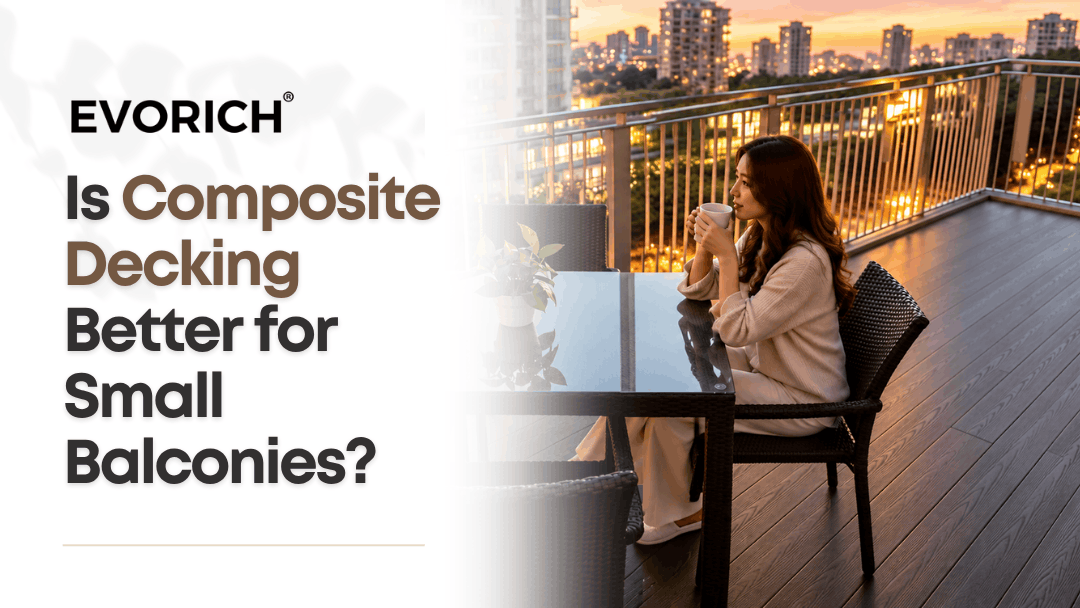
Is Composite Decking Better for Small Balconies?
It can be.
Timber-inspired decking can visually soften a small balcony and make the space feel warmer and more inviting.
Using lighter timber tones may also help create a brighter appearance.
For compact condo balconies, homeowners can combine decking with:
- Compact outdoor furniture
- Potted plants
- Warm lighting
- Small side tables
This can turn an otherwise unused balcony into a practical relaxation area.
Why Consider evoDECK for Your Balcony?
For homeowners looking for premium composite outdoor decking in Singapore, evoDECK by EVORICH offers a timber-inspired decking solution designed for outdoor applications.
evoDECK has been used in residential and commercial environments in Singapore, including notable locations such as Changi Airport and Sentosa.
It is designed to provide the aesthetic appeal of timber while offering the practical advantages expected from modern outdoor decking.
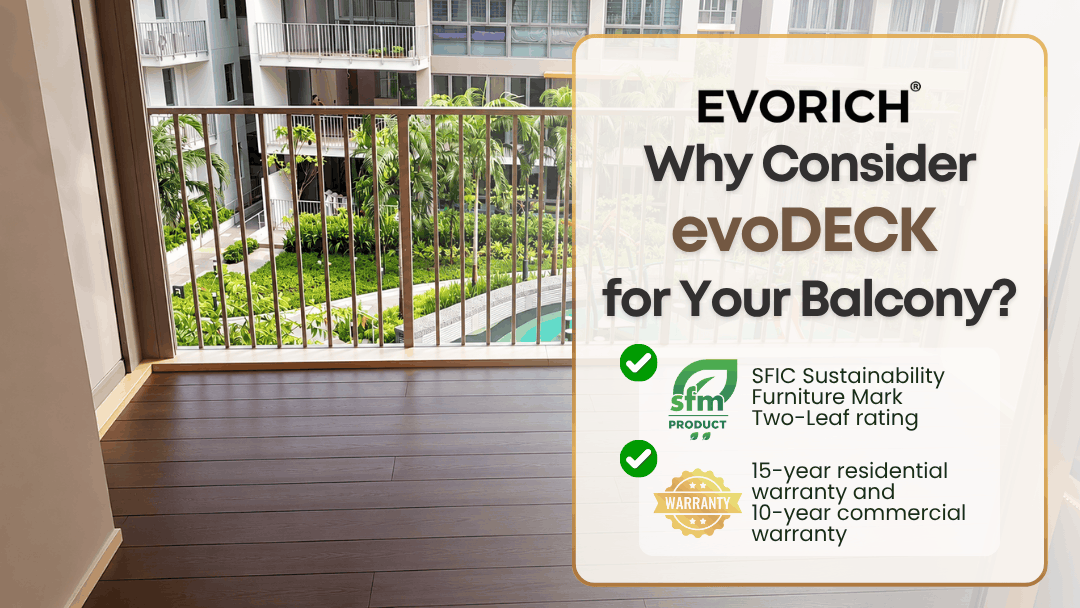
evoDECK also carries the SFIC Sustainability Furniture Mark Two-Leaf rating, supporting homeowners who consider sustainability as part of their renovation choices.
For added assurance, evoDECK comes with up to a 15-year residential warranty and 10-year commercial warranty, subject to applicable terms and conditions.
Composite Decking vs Tiles: Which Should You Choose?
Choose composite decking if you prefer:
- A timber-inspired look
- A warmer outdoor atmosphere
- Resort-style aesthetics
- Lower maintenance than natural timber
- An outdoor surface that feels distinct from indoor flooring
Consider outdoor tiles if you prefer:
- A hard, solid flooring surface
- Cement, stone or marble aesthetics
- A conventional tiled balcony
- A more seamless visual appearance
There is no single flooring option that is best for every balcony.
The right choice depends on your design preference, balcony condition, budget and how you intend to use the space.
Frequently Asked Questions
Is composite decking better than tiles for a balcony?
Neither option is universally better.
Composite decking may suit homeowners who want a warmer timber-inspired appearance, while tiles may suit those who prefer a harder and more seamless surface.
Is composite decking suitable for Singapore weather?
Quality composite decking designed for outdoor use can be suitable for Singapore’s humid and rainy climate. Proper installation and drainage remain important.
Does composite decking require a lot of maintenance?
Composite decking generally requires less maintenance than natural timber. Regular cleaning and removal of debris are usually sufficient for routine care.
Are balcony tiles easier to clean?
Tiles are generally easy to clean, although grout joints may require additional maintenance depending on exposure and usage.
Can composite decking be installed over existing tiles?
Depending on the site condition and installation system, composite decking may sometimes be installed over an existing tiled surface. Door clearance, drainage and finished floor height must be assessed first.
Which flooring makes a balcony look more expensive?
This depends on the overall design. Composite decking often creates a resort-inspired or natural luxury aesthetic, while stone or cement-look tiles can create a more contemporary architectural feel.
Final Thoughts
The choice between composite decking and outdoor tiles for a Singapore balcony ultimately comes down to how you want your outdoor space to look, feel and function.
Tiles offer a solid and familiar flooring solution.
Composite decking offers a warmer, timber-inspired alternative that can turn an ordinary balcony into a more inviting outdoor living area.
If you prefer the appearance of timber but want a solution designed for Singapore’s outdoor environment, evoDECK is worth exploring.
Thinking of transforming your balcony?
Speak with an EVORICH specialist to compare decking options and assess the suitability of your balcony.
📲 WhatsApp EVORICH at 8795 2118 for a consultation.